


Biomass & Recycling
Export wood chip size: reference ranges and quality controls
In export wood chip production, high throughput alone is not enough to create a valuable shipment. After chipping, the material must also meet requirements for size, uniformity, fines content, bark content, moisture, and contamination. Among these criteria, export wood chip size is important because it directly affects acceptance by paper mills, the efficiency of pulp processing, and the value of the shipment.
Producers should note, however, that no single size specification applies to every market and customer. Each importing mill may set a different size range, acceptable-chip percentage, and tolerance. Businesses therefore need to control quality according to the contract rather than relying on one general specification.
MỤC LỤC
What export wood chip size ranges does the source provide?
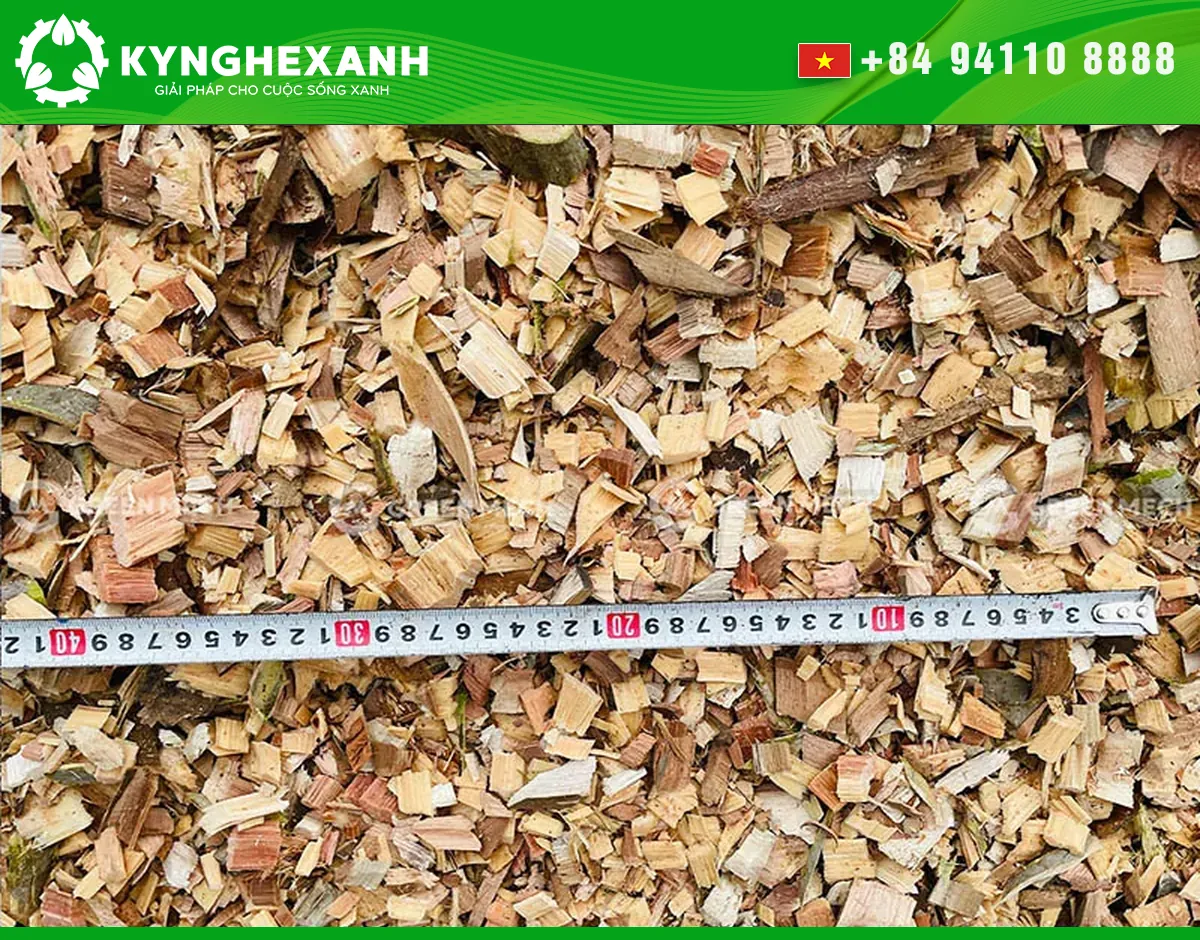
Wood chips used by the pulp industry are generally formed as relatively thin pieces with consistent length, width, and thickness. A technical document on commercial wood chips from the International Plant Protection Convention indicates that pulp mills around the world may use different acceptable size ranges. The reference ranges it gives are:
- Approximately 4–8 mm thick.
- Approximately 15–20 mm wide.
- Approximately 40–45 mm long.
- The proportion of chips in the acceptable group may be required to reach 90% or more.
- Oversize chips, small chips, bark, and noncompliant material may account for only a limited proportion.
These figures are for reference; they are not a mandatory standard for all wood chip exports. The same document also emphasizes that chip dimensions vary among pulp mills around the world and are generally controlled according to each mill’s own acceptable range.
Before arranging production, a business should therefore ask the customer to specify the required length, width, thickness, fines percentage, oversize-chip percentage, bark content, and sampling method. These requirements provide the correct basis for determining the compliant export wood chip size for each order.
Why does wood chip size affect export quality?
Most high-quality wood chips in international trade are used by the pulp and paper industry. Chips made from roundwood generally have stricter quality requirements than chips used as biomass fuel or chips made from by-products, branches, treetops, and recovered wood.
Inconsistent chip size can reduce processing efficiency. Chips that are too thick or too large are often difficult for chemicals to penetrate evenly during pulp cooking. The core of a chip may remain incompletely treated while its outer layer has been exposed for longer.
By contrast, chips that are too small, fragments, and wood fines have a larger contact area and therefore react faster. If their proportion is too high, the process may become difficult to control, reduce fiber recovery, and create quality differences among portions of the raw material.
During transportation, chips that are too long or irregularly shaped can also interlock, create voids, and make load density unstable. A large quantity of fines can generate dust, adhere to conveying equipment, and cause losses during loading and unloading.
Quality indicators to control beyond chip size
When evaluating export wood chip size, a business should not measure only the length of a few pieces. Shipment quality needs to be assessed across several groups of indicators.
Proportion of chips within specification
This is the proportion of chips within the size range accepted by the customer. A shipment may have a suitable average size but still be judged noncompliant if the proportions of pieces that are too large or too small are high.
The producer’s objective is to create a concentrated size distribution and limit excessive differences among chips.
Proportion of oversize chips
Oversize chips include pieces that are too long, too wide, or too thick for the requirement. Common causes include dull chipper blades, an unsuitable blade clearance, inconsistent material feeding, or a feeding mechanism that does not operate in sync.
Oversize chips should be separated and rechipped instead of being mixed directly into an export shipment.
Proportion of small chips and wood fines
Fines and chip fragments may form when the raw material is too dry, the wood is decayed, the blades are not sharp, or the material is subjected to strong impacts during transportation. If the proportion of small chips exceeds the contractual limit, the shipment may be discounted or require reclassification.
Bark and contaminant content
Bark, soil, sand, stones, metal, and other nonwood materials all reduce chip quality. These materials can increase ash content, cause equipment wear, and affect the customer’s production process.
Chip-classification systems are therefore often combined with contaminant-removal equipment and incoming-material inspection.
Wood chip moisture
Moisture affects commercial weight, storage, and chip-use efficiency. The source’s international technical document also treats moisture, size, ash content, bulk density, and calorific value as important characteristics when classifying wood chips, particularly chips used for energy.
A business should agree clearly with the buyer on how moisture and billable weight will be determined to avoid differences in acceptance results.
What determines wood chip uniformity?
Characteristics of the input material
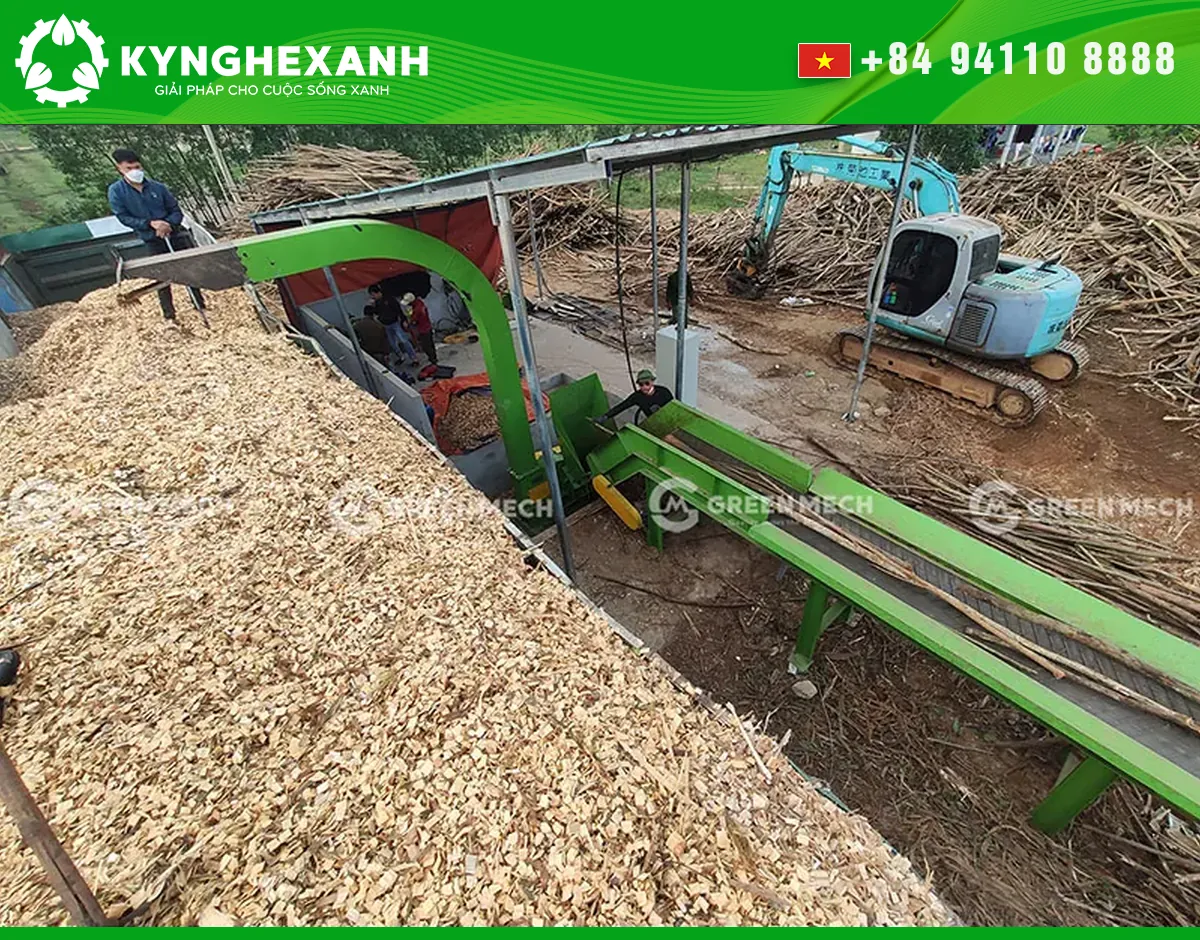
Wood with widely varying diameters, many knots, curved sections, decay, or numerous branches will produce chips with less consistent dimensions than sorted wood. If several types of material enter the machine at the same time, the chipper load changes continuously, making stable quality difficult to maintain.
Before chipping, wood should be grouped by diameter, and soil, sand, metal, and unsuitable material should be removed. Whether debarking is necessary depends on the requirements of each order.
Condition of the chipper blades
Chipper blades directly determine the surface shape and dimensions of each chip. Sharp blades create a clean cut, limit fiber tearing, and reduce the production of fines.
When blades are dull, chipped, or installed out of balance, the machine may produce more long chips, fragments, and crushed wood pieces. Producers should therefore inspect blades periodically, sharpen them to the correct angle, and replace them when they can no longer cut properly.
Blade clearance and installation position
The distance between a chipper blade and the counter-knife directly affects chip thickness. Excessive clearance can cause the wood to tear instead of being cut. Conversely, insufficient clearance can increase contact, heat the machine, and accelerate blade wear.
After each blade removal, installation, or sharpening, the clearance should be readjusted according to the technical instructions for that machine line.
Material feed rate
Feeding wood too quickly keeps the machine operating under a high load, which reduces its ability to maintain a stable chip size. Feeding too slowly prevents the line from using its capacity efficiently.
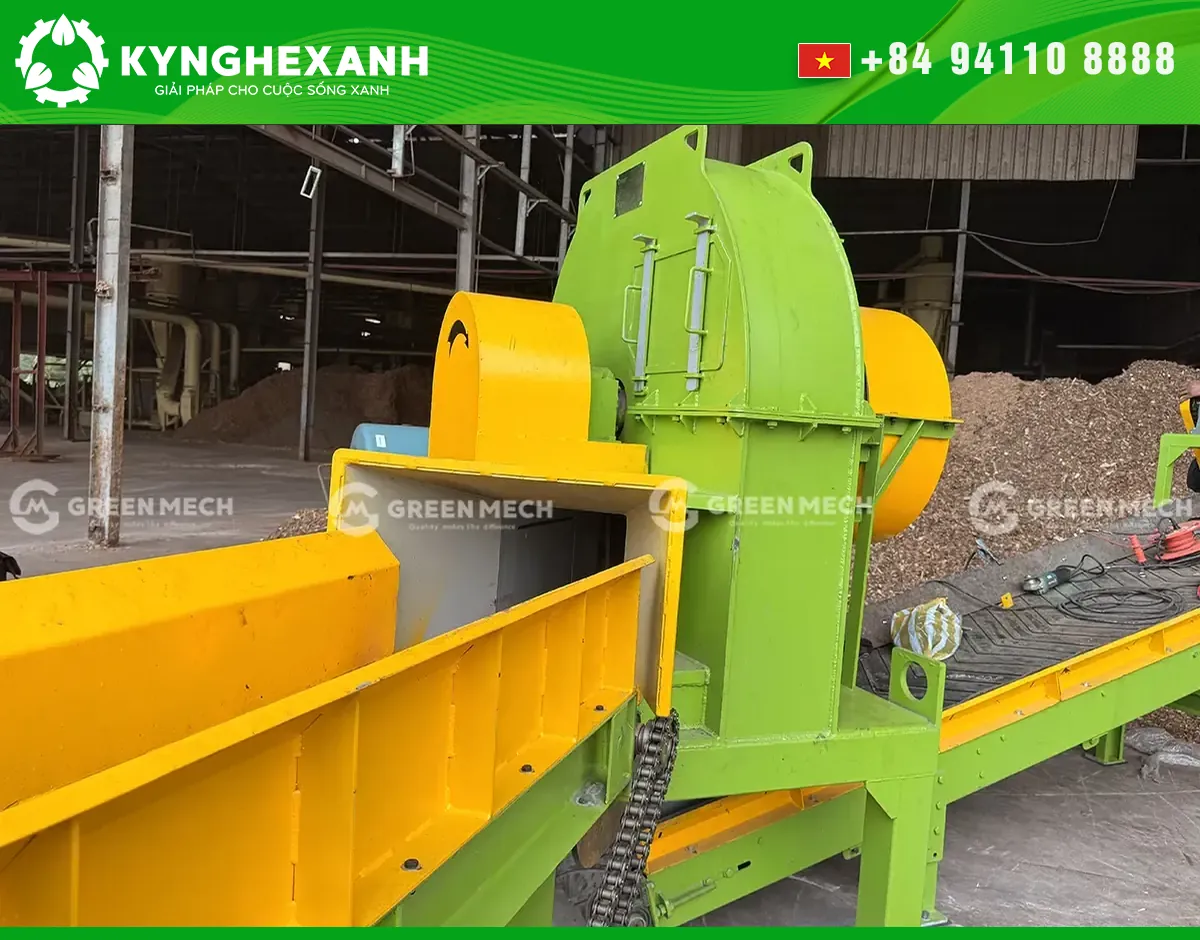
The feeding system needs to deliver wood evenly and avoid alternating between overfeeding and interruption. This is why the pulling and pressing mechanisms play an important role in high-capacity wood chippers.
A process for controlling wood chip size before export
To maintain a compliant export wood chip size, a business can establish controls for each production stage.
First, the input material needs to be sorted and cleaned. Wood contaminated with soil, stones, or metal not only affects chip quality but can also damage the blades and chipping assembly.
Next, the chipper needs to be configured for the log diameter, material type, and desired output size. After startup, the producer should run a small test quantity for inspection before beginning mass production.
During operation, chip samples must be collected at different times. A sample needs to represent the entire production shift rather than material taken only from one convenient location. The chips are then separated by screens to determine the proportions that are compliant, oversize, and undersize.
Pieces that are too large can be returned to the chipper for reprocessing. Fines and undersize chips should be separated for suitable uses, such as fuel or biomass-product production, instead of being mixed back into the shipment.
Finally, records for each shipment should cover the raw-material source, production time, blade condition, classification results, and moisture. Lot-level traceability helps a business quickly identify the cause when quality changes.
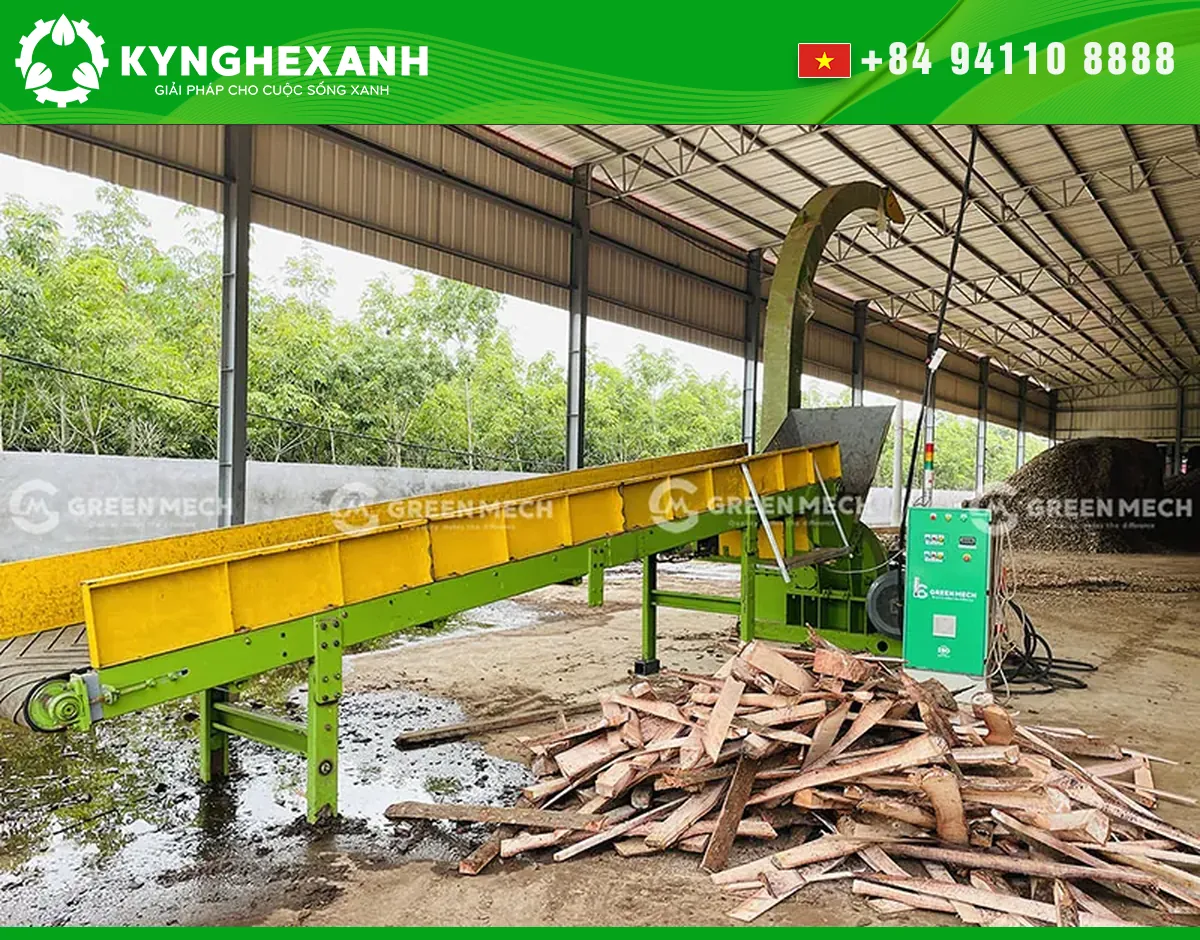
The role of wood chippers in producing compliant chips
A chipper determines not only throughput but also the proportion of chips that meet specification. When selecting equipment, a business needs to consider the material type, log diameter, actual capacity, feeding method, and output size required by the customer.
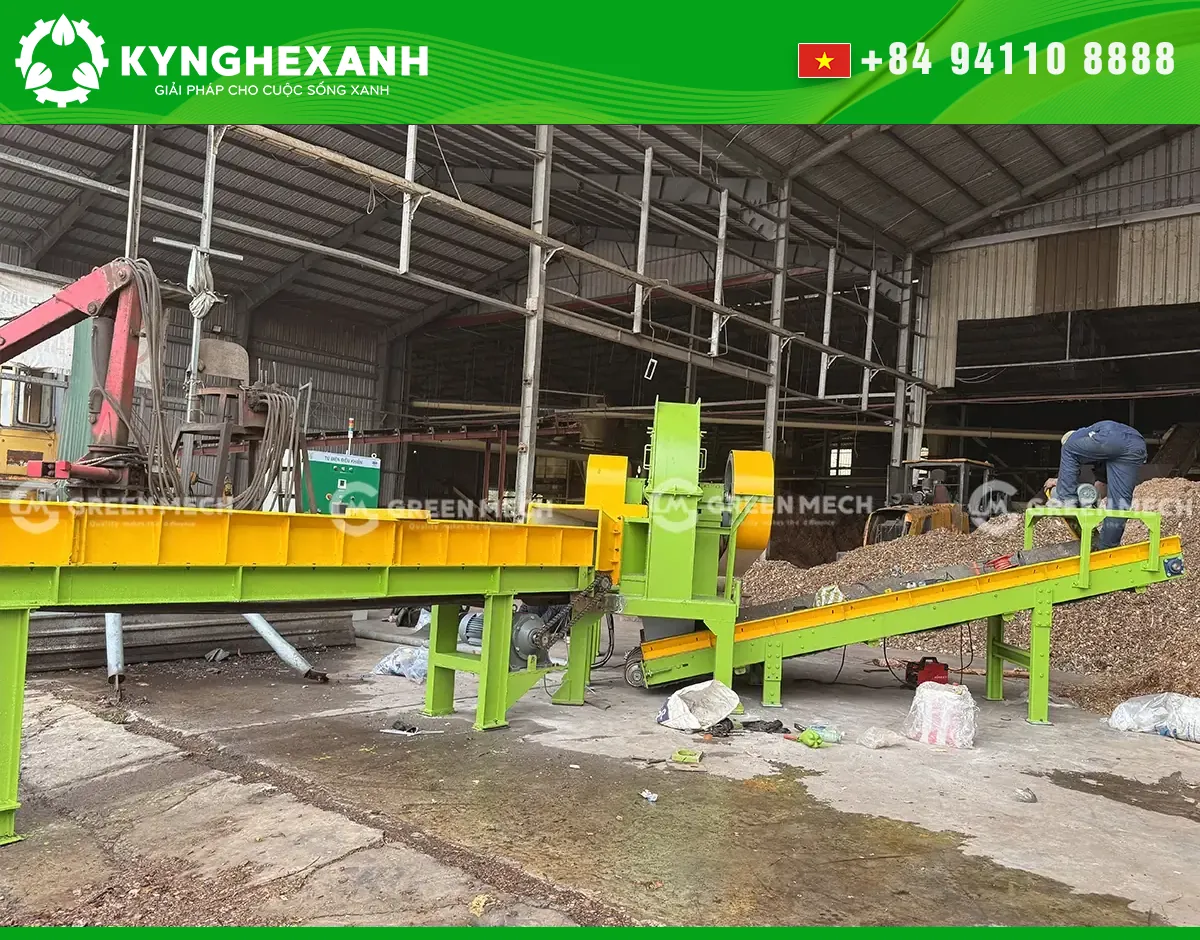
GREEN MECH wood chippers can be evaluated for different material requirements and line scales. Coordinating the wood-feeding system, chipping assembly, conveyors, and classification equipment gives the producer greater control over chip size.
One specific published equipment example on the English site is the 20 ton wood chipper. The target product body identifies this configuration for export wood chip factories; the equipment and line still need to match the input material and required chip dimensions.
Even with suitable equipment, however, output quality still depends on operation and maintenance. A business needs to schedule blade inspections, monitor vibration, noise, and motor load, and sample chips regularly. Adjustments should not be postponed until a customer reports a problem.
Standard size is not the only export requirement
In addition to size, exporters need to consider the legal origin of the wood, traceability records, phytosanitary requirements, cleanliness, and the specific conditions of the importing market.
For markets with strict requirements on deforestation prevention and legal raw-material sourcing, the ability to trace the wood’s origin is becoming increasingly important. The source states that Vietnam’s Ministry of Industry and Trade has also noted that wood products exported to the European Union are subject to controls related to the EU Deforestation Regulation, which creates higher requirements for supply chains and raw-material documentation.
A business should therefore not focus exclusively on producing chips of the correct size while overlooking raw-material area management, documentation, and consistency among shipments.
Export wood chip size is not a fixed number for every order. The specific dimensions must be based on the importer’s requirements, intended use, and contractual conditions.
To increase the proportion of compliant chips, a producer needs coordinated control of the incoming wood, blade condition, blade clearance, feed rate, and screening stage. Investing in a GREEN MECH chipper that suits the material and actual capacity can help the business build a more stable line, limit oversize chips, reduce fines, and improve its ability to fulfill export orders.
Request a wood chipper quote
A wood chipper should be selected against the actual feedstock, log diameter, required chip distribution, and planned throughput. The machine alone does not replace sampling, screening, blade maintenance, or buyer-specific acceptance checks.
For a current equipment review and quote, visit kynghexanh.com.vn or call +84 94 110 8888.