


Tech news
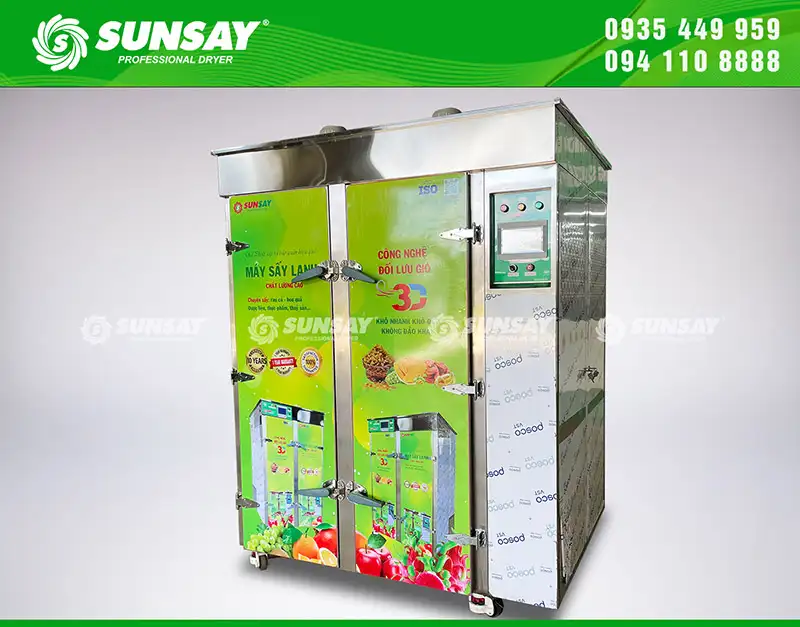
How to choose SUNSAY heat pump dryer by food type and production scale
When starting to explore how to choose SUNSAY heat pump dryer, many people tend to focus only on the number of trays or the machine price, but that is just a very small part of the investment equation. In reality, choosing the right heat pump dryer is not simply about selecting a larger or smaller model, but about choosing equipment that matches the type of material, daily production capacity, desired product quality, and long-term development goals of the business.
If the right choice is made from the beginning, businesses can save on investment costs, ensure more stable operation, and more easily develop high-value dried products in the market. On the other hand, choosing the wrong machine can lead to increased costs in many stages that are not immediately apparent.
SUNSAY heat pump dryers are gaining attention from many manufacturers thanks to their ability to operate at low temperature ranges, helping preserve color, flavor, and nutritional value better than many traditional heat drying methods.
This is a suitable solution for temperature-sensitive products such as fruits, medicinal herbs, seafood, and certain processed foods that require maintaining an appealing appearance after drying. However, it is not always necessary to choose the largest machine for high-end products. To invest effectively, buyers need to clearly understand their actual needs before deciding on a model.
MỤC LỤC
Why choose Sunsay heat pump dryer increases investment costs
The most common mistake when purchasing a heat pump dryer is choosing based on intuition. Some people fear insufficient capacity and buy a machine that is too large, even though the actual production volume is not enough to fully utilize the machine. Others try to save on initial capital by selecting a model that is too small, resulting in running multiple batches, higher labor costs, more time spent, and quickly creating the need to upgrade the machine. Both situations increase the actual investment cost.
If the machine is too large, you will have to spend more on the initial investment than necessary. In addition, larger machines usually require more installation space, sometimes need a more suitable power source, and the operation process must be carefully planned to fully utilize its capacity. Meanwhile, if the daily raw material volume is low, the cost per kilogram of finished product will not be optimized as expected.
Conversely, if the machine is too small, you may face pressure during operation. When actual production increases but the machine cannot keep up, production time is extended, orders are delayed, or too many batches must be run. This is particularly disadvantageous for businesses producing seasonal foods or handling large orders in a short time. In such cases, the money saved when purchasing the machine initially turns into lost opportunity costs.

6 Criteria to determine before choose SUNSAY Heat Pump Dryer
Choose by type of raw material
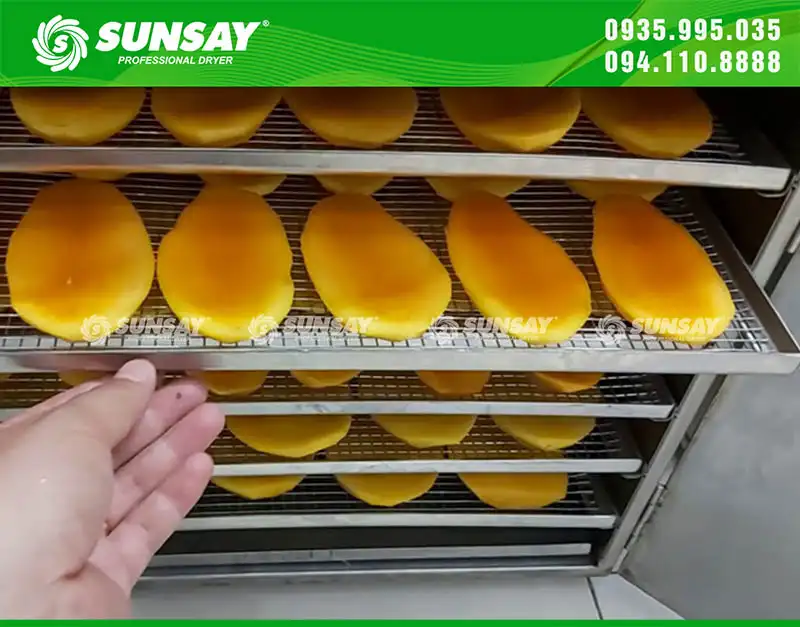
This is the first and most important criterion. Each food group has very different characteristics. Fresh fruits such as mango, banana, jackfruit, and dragon fruit require prioritizing color retention, aroma preservation, and minimizing browning on cut surfaces.
Medicinal herbs like chrysanthemum, saffron, reishi, and herbal teas need to preserve essential oils, active compounds, and avoid excessive heat exposure. Seafood such as shrimp, squid, fish, or other odor-sensitive products need to maintain structure, prevent shrinkage, and limit unwanted odors during drying.
SUNSAY heat pump dryers are suitable for heat-sensitive raw materials because they operate at lower temperatures, allowing moisture removal to occur gradually and more stably. Therefore, if your product belongs to a group that requires high sensory quality, heat pump drying should be the preferred choice.
Choose by daily production volume
Many people confuse input volume with finished product capacity. For example, processing 100 kg of fresh raw material per day does not automatically mean you only need a dryer with 100 kg per batch, because it also depends on the number of batches per day, drying time, initial moisture content, and the target final dryness.
Therefore, when selecting a machine, clearly determine:
- How many kilograms of raw material you need to process each day
- How long each batch is expected to take
- How many batches will be run per day
- Whether production is expected to increase over the next 6–12 months
With this calculation method, you can avoid purchasing a machine that only meets current needs but quickly becomes overloaded after a few months of operation.
Choose by the Goal: Preserve Aroma, Color, or Active Compounds
Not everyone buying a food heat pump dryer has the same goal. Some businesses prioritize maintaining attractive color for retail sales. Others producing medicinal herbs, teas, or functional foods focus on preserving active compounds. For specialty foods, gift items, or premium products, color, aroma, and product structure are all important.
By clearly defining priorities from the start, you can select a machine model that better matches your production method. For example, for dried fruits sold as gift items, color and uniformity of slices are very important. For medicinal herbs, preserving bioactivity is usually the main priority. For seafood, controlling odor and maintaining structure are more critical. Choosing a machine based on your goal helps fully leverage the advantages of heat pump drying technology.
Choose by installation space
This criterion is often overlooked when buying a machine for the first time. Many facilities only look at catalog dimensions without considering how to bring the machine into the workshop, working clearance, door openings, drainage location, power supply, and cleaning area after each batch. As a result, installation can encounter unexpected obstacles, wasting labor and delaying progress.
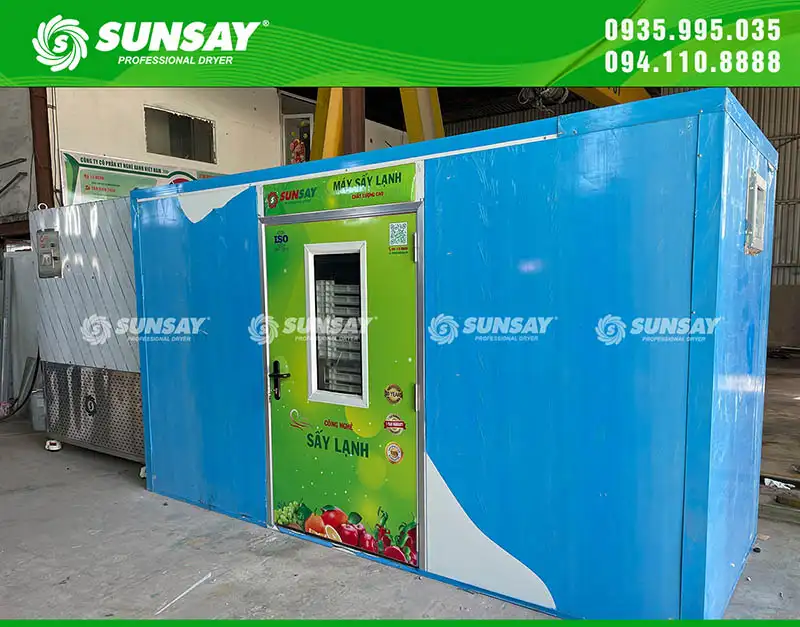
For small facilities, selecting a compact and easy-to-arrange machine is much more advantageous. For medium-sized workshops and factories, it is important to plan the layout long-term to avoid rearranging the production area when increasing capacity later.
Choose by power source and level of automation
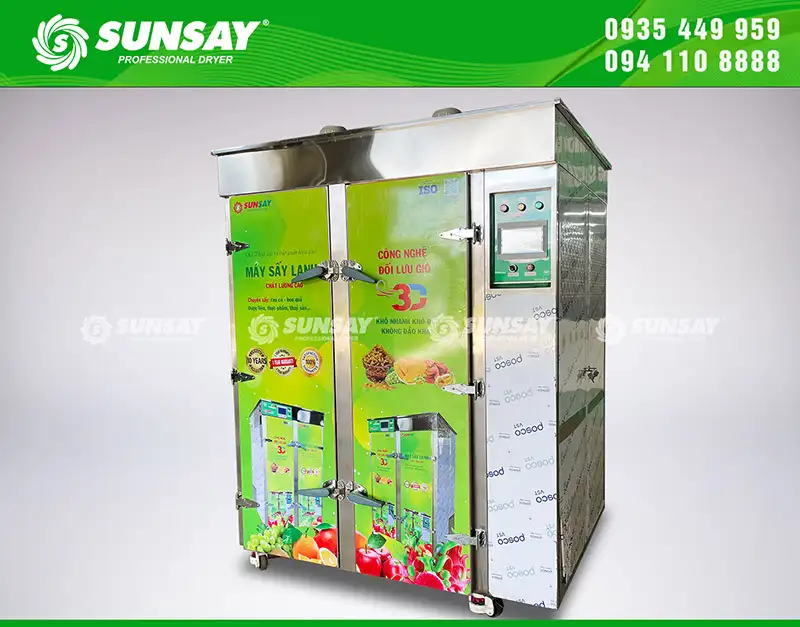
Small and medium models are usually more suitable for small-scale facilities or newly established workshops because they are easier to deploy. In contrast, large models are suitable for businesses that require higher productivity and aim for more professional operation. Besides the power supply, buyers should also consider the level of automation. If the facility has few operators, frequently changes products, or needs to save drying recipes, choosing a model with advanced controls will be more convenient in the long run.
Choose according to future expansion plans
A wise investment decision should not only consider the present. If you are operating on a small scale but plan to expand output, increase production, or develop new product lines, the machine you choose should have a reasonable “capacity buffer.” It is not necessary to buy an overly large machine, but you also should not select one that only meets the current minimum requirements. A properly sized capacity buffer helps avoid early upgrades and saves costs in the future.
Types of Food Heat Pump Dryers


Heat pump dryer videos producing beautiful colors in dried foods
Contact us for free technical consultation on industrial dryers
Are you looking for a cold drying solution that does not alter the product, preserving the natural color, flavor, and nutritional value of agricultural produce, food, or medicinal herbs?
SUNSAY is ready to support you from consultation, selecting the right model, conducting sample product drying, to design, installation, and operational support.
Our team of specialized engineers is always available to answer any questions, helping you optimize costs and ensure the highest drying efficiency.
For detailed consultation, please visit our website: kynghexanh.com.vn or contact us directly via Hotline (Zalo): 0935 995 035 or the main line: 094 110 8888 for support.