







Design of a 5-Ton Multi-Purpose Heat Pump Dryer for Vegetables, Fruits, and Medicinal Herbs
1,000 $
Mastering the technology to design heat pump dryers with various capacities, tailored to different types of materials in Vietnam, has been the goal that SUNSAY Dryers have pursued for over 15 years.
Generally, heat pump drying is applied to high-value products or large-scale products that require low-temperature drying. Using conventional thermal dryers for such products would result in very high electricity costs. Another advantage of heat pump drying is its energy efficiency, with power consumption only 1/5 to 1/3 of that of hot-air drying.
Mastering the technology to designs heat pump dryer with various capacities, tailored to different types of materials in Vietnam, has been the goal that SUNSAY Dryers have pursued for over 15 years.
Design of the 5-Ton SUNSAY Heat Pump Dryer
Currently, heat pump dryers are beginning to be used in industrial applications. They are widely applied in industrial low- and medium-temperature drying and dehumidification processes, including drying agricultural products, seafood, and more. Heat pump dryers used for industrial drying typically offer high efficiency and often improve product quality compared to traditional hot-air drying methods. Let’s explore the design of the 5-ton SUNSAY heat pump dryer.
What is Heat Pump Drying?
Heat pump drying, known in English as a Heat Pump Dryer, is an industrial drying technology that uses a closed-loop refrigeration system. The refrigeration system operates with refrigerants such as R22 or R404a, following the principle of compressing the gas to high pressure to generate hot air for the drying system.
Alongside the generation of hot airflow, the heat pump drying system also includes a cooling coil system to balance the temperature. This cooling coil condenses moisture, removing water from the drying air and producing drier air. As a result, products are dried efficiently while maintaining quality.
Thus, a single system can simultaneously provide a dehumidification system, a heating system for drying, and a recirculating airflow system. Such a drying system is called a heat pump dryer.
Are Heat Pump Dryers and Cold Dryers the Same?
The answer is yes. In terms of system principle, a heat pump dryer and a cold dryer operate in the same way; the difference is only in the name. A key feature of a heat pump dryer is that it does not intake outside air or exhaust air—the drying air is fully recirculated within the machine. Some dryers may intake and exhaust air, but those are actually thermal dryers with auxiliary cooling systems, and are not true cold dryers or heat pump dryers.
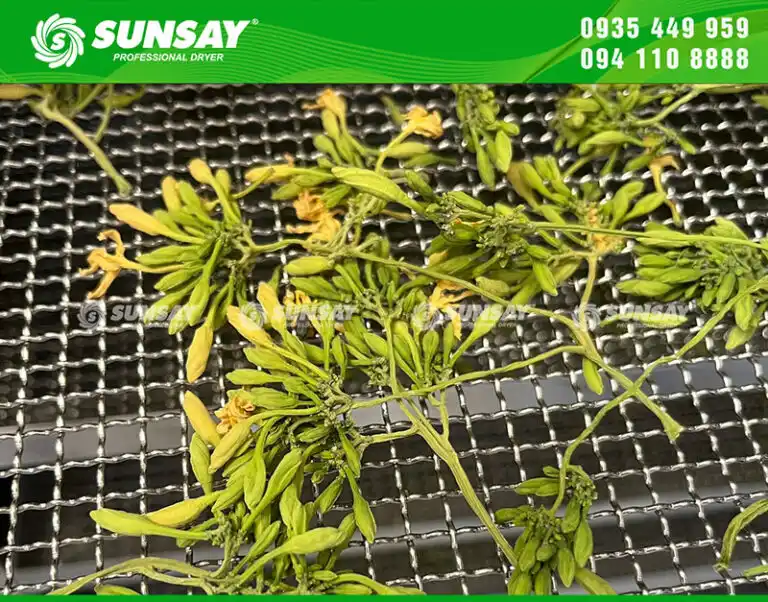
Heat pump dryers, or cold dryers, operate at a low drying temperature range of 5–60 °C, making them suitable for a wide variety of products that require low-temperature drying, such as flowers, vegetables, food, seafood, medicinal herbs, starch, mushrooms, and more. Heat pump drying has the advantage of better preserving the color and nutritional content of products, and it dries faster at the same temperature compared to conventional hot-air dryers.
Structure of a Heat Pump Dryer
The typical structure of a heat pump dryer includes the following components:
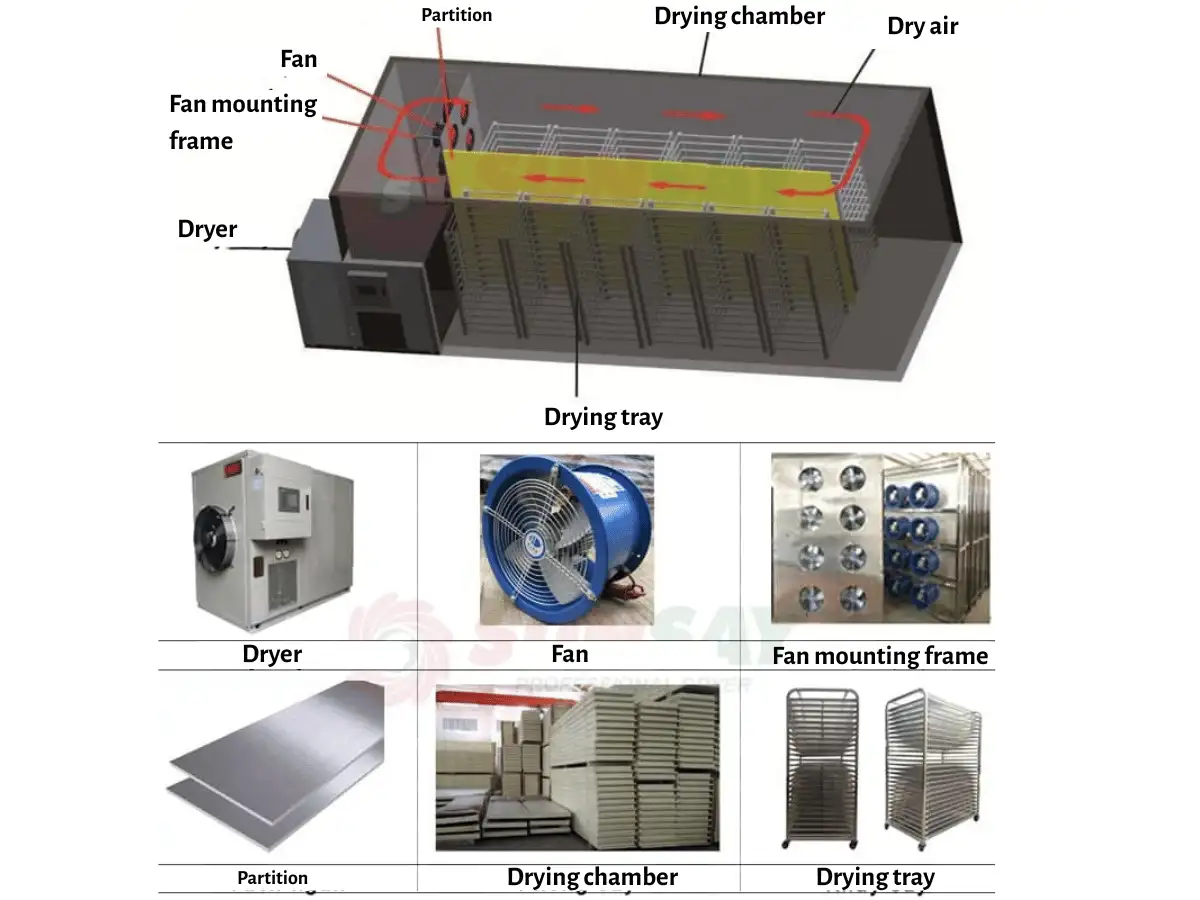
Drying Chamber
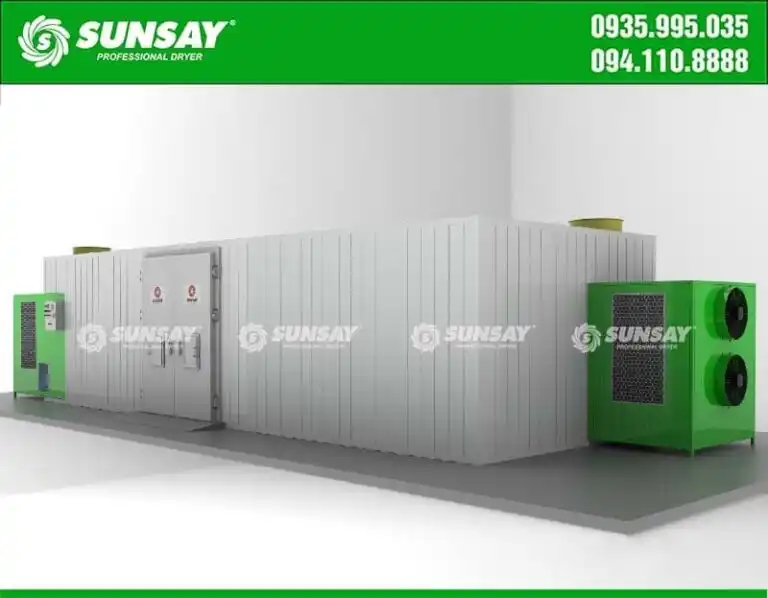
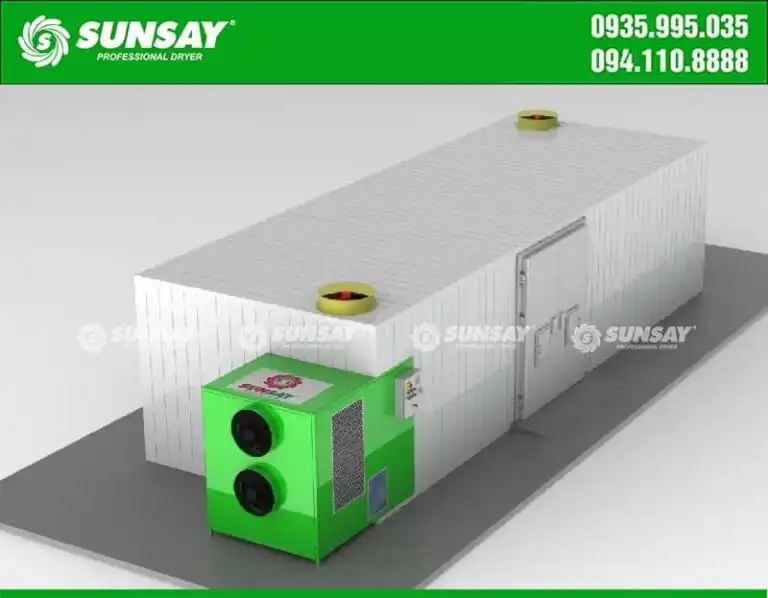
The drying chamber is made of high-quality 304 stainless steel panels. To facilitate transportation and assembly, the panels of the heat pump dryer are designed with interlocking grooves and locks to connect the panels securely.
Trolley (Goong Cart)
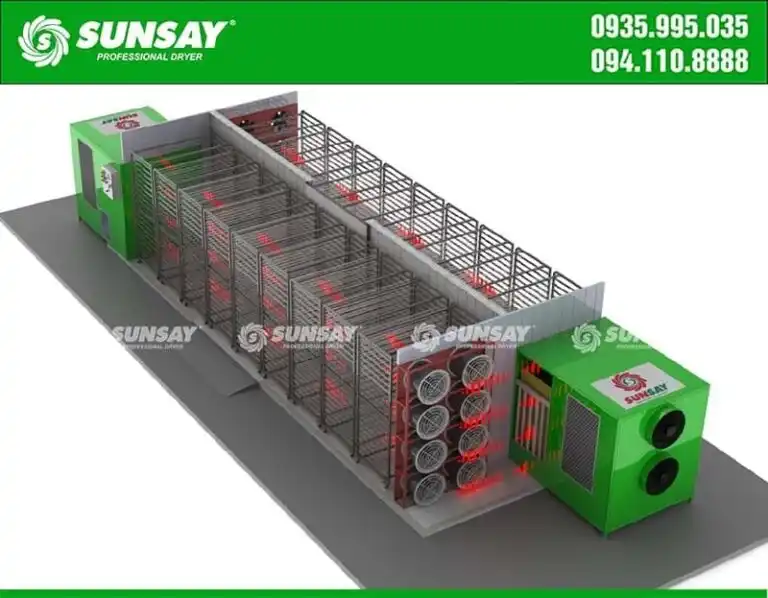
The trolley is used to hold the drying trays. In the 5-ton heat pump dryer design, 18 trolleys are provided to accommodate the full drying capacity per batch. The trolleys must be sturdy, with a 304 stainless steel frame, load-bearing wheels, and locks to secure the trolley when stationary. Additionally, vertical locks on the trolley keep the trays in place during movement, preventing them from sliding or falling when pushed by operators.
Drying Trays
The trays are fully made of 304 stainless steel with perforations. Heat pump dryer trays are designed as solid sheets with embossed sections to add rigidity and form edges. This design minimizes sharp corners, reducing microbial adhesion and making cleaning easy after each drying cycle. These trays are highly durable and aesthetically refined.
Airflow Channels for Drying and Moisture Removal
In the heat pump dryer design, air channels are critical for ensuring uniform drying. Whether the product dries evenly depends on the airflow design and the ability of the manufacturer to calculate and engineer the system properly. Air channels deliver hot air to the product and carry away moisture evenly—this requires high technical expertise.
Condensation Unit (Moisture Separation Component)
This component, also called the dehumidification unit, determines how effectively moisture is removed from the drying air. Moist air from the drying chamber is directed to the cooling coil, condensed into liquid, collected in a water tray, and discharged through piping. The efficiency of moisture removal depends on the capacity and design of the condensation unit.
Wastewater Piping
The wastewater piping is typically made from flexible plastic or specialized PVC pipes to discharge water from the cooling coil. The piping should lead directly to the wastewater drainage area. In designing a heat pump dryer, attention must be paid to the installation location and elevation of the dryer relative to the factory’s drainage system to ensure complete water removal and avoid flooding.
Refrigeration Compressor (Gas-Powered)
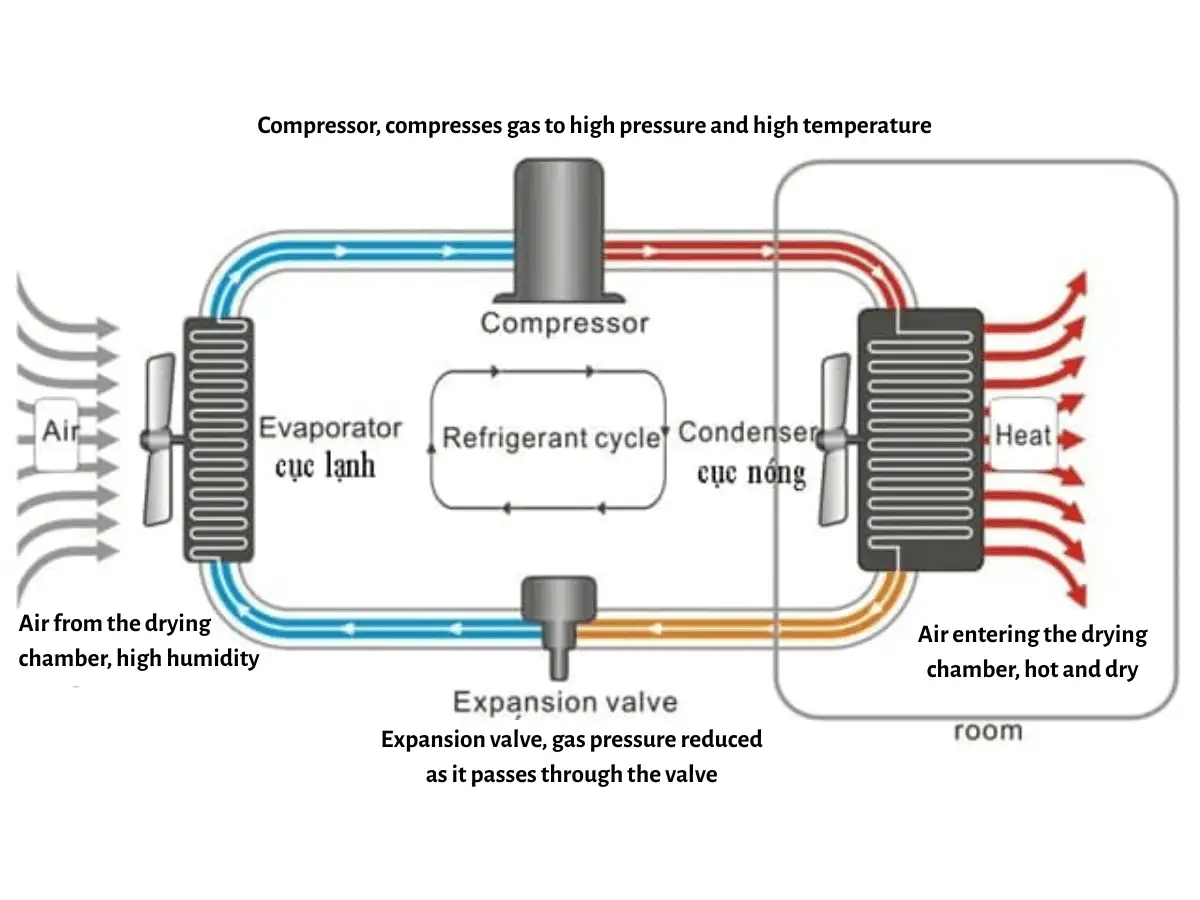
The refrigeration compressor in a heat pump dryer is considered the heart of the system. Its operation generates both hot air for the drying process and cold air for moisture condensation. The majority of the heat pump dryer’s electricity consumption is concentrated in the compressor.
Depending on the required capacity, selecting a suitable compressor is essential to ensure durability and continuous operation of the system.
There are many types of compressors, each with different operating environments and principles. Using an inappropriate compressor can lead to unstable operation, frequent breakdowns, or inefficient moisture removal, which increases electricity consumption.
Hot Heat Exchanger (Condenser Coil)
The hot heat exchanger is positioned after the compressor to extract hot gas and supply heat to the drying chamber. It is typically made of copper tubes and aluminum fins to achieve maximum heat transfer efficiency.
Cold Heat Exchanger (Moisture Separation Coil / Evaporator)
The cold coil is positioned after the expansion valve and the hot heat exchanger. Gas passing through the hot coil is depressurized at the expansion valve, reducing its temperature. The cold coil can reach sub-zero temperatures, causing moisture in the air to condense and be captured. The cold coil is similar in structure to the hot coil but has thicker heat exchange fins to improve moisture retention.
Convection Fan
The convection fan functions as the “circulatory system” of the dryer, moving air throughout the system. Heat pump dryer fans must provide sufficient airflow and pressure. For food-grade heat pump drying systems, the fan should be entirely made of 304 stainless steel to ensure food safety and hygiene.
Types of food heat pump dryers


Operating Principle of a Heat Pump Dryer
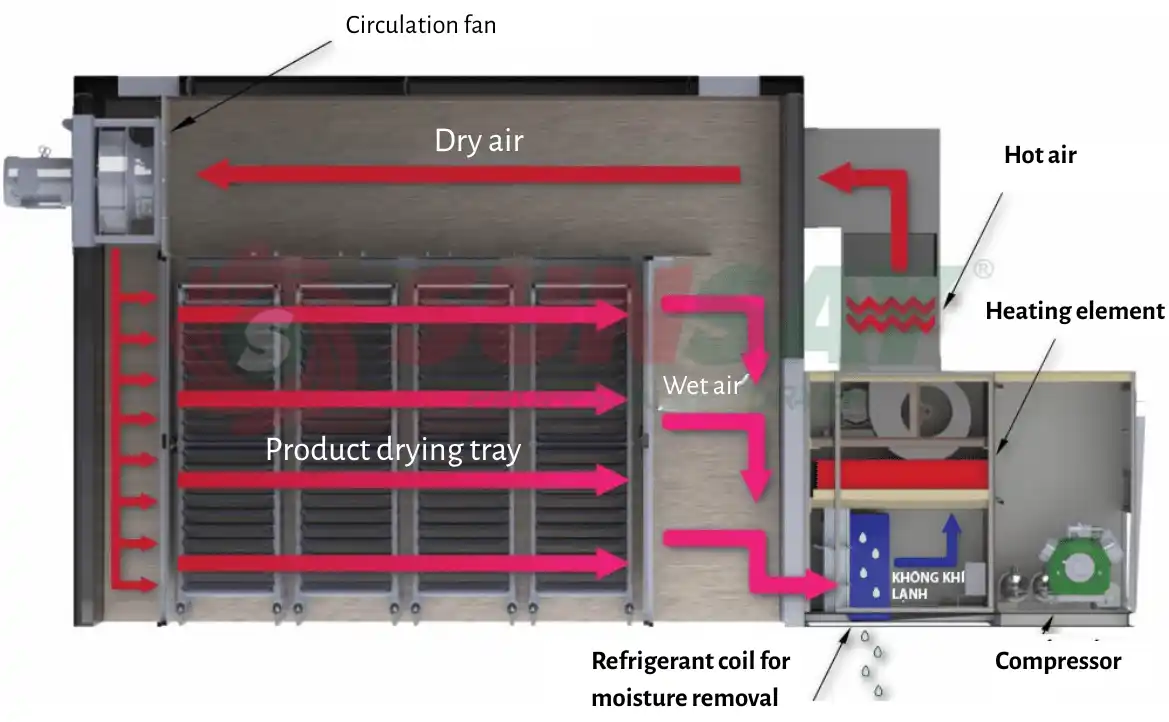
According to the diagram illustrating the operating principle of a heat pump dryer, when the system starts, the dual circulation drying fan begins operating, circulating air inside the drying chamber. Air passes through the heat exchanger, where it is heated, and then enters the drying chamber, flowing over the surface of the material. The hot air extracts moisture from the products and is directed toward the condensation unit.
In the condensation unit, the moisture is condensed into liquid and collected in a tray, while the dried air is recirculated back to the hot heat exchanger to continue the cycle. This process repeats until the product reaches the desired moisture content.
Installation of the Heat Pump Dryer System
Applications of Heat Pump Dryers in Product Processing
Currently, heat pump dryers are beginning to be adopted in industrial applications. They are widely used for low- and medium-temperature drying and dehumidification, including drying agricultural products, seafood, and more. Heat pump dryers for industrial drying typically offer high efficiency and often improve product quality compared to traditional hot-air drying methods.
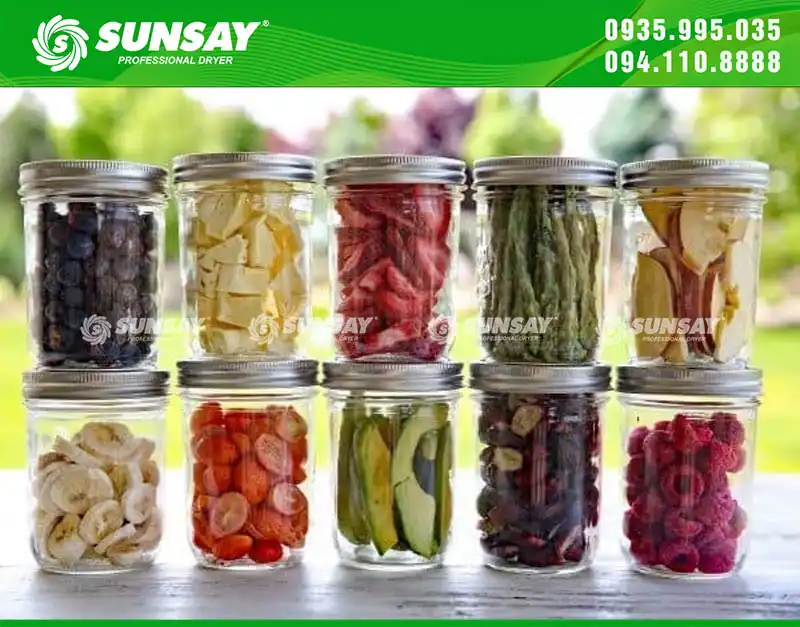
The application range of heat pump dryers is very broad. However, the choice of which dryer to use depends on the scale of production, desired capacity, product quality, and cost-effectiveness. Currently, the price of cold dryers or heat pump dryers is not significantly higher than that of conventional hot-air dryers.
Typically, heat pump drying is applied to high-value products or large-scale products that require low-temperature drying. Using conventional hot-air dryers in such cases would result in very high electricity costs. Heat pump dryers also offer the advantage of high energy efficiency, consuming only 1/5 to 1/3 of the power compared to hot-air drying.
Key Highlights of SUNSAY Industrial Fruit Cold Dryers
- With Made-in-Vietnam technology, SUNSAY’s industrial fruit cold dryers save up to 85% energy compared to traditional hot-air drying and 45% compared to heat pump dryers. This technology helps businesses and production facilities reduce operating costs while maintaining high product quality.
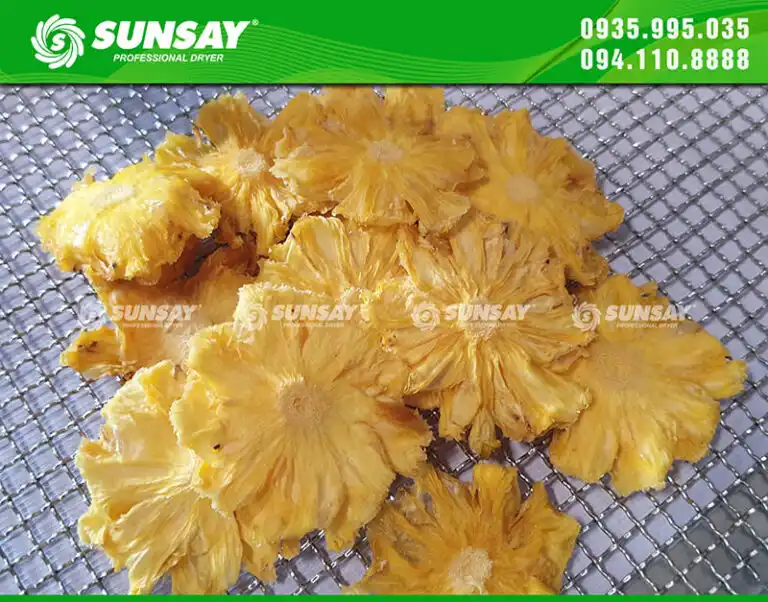
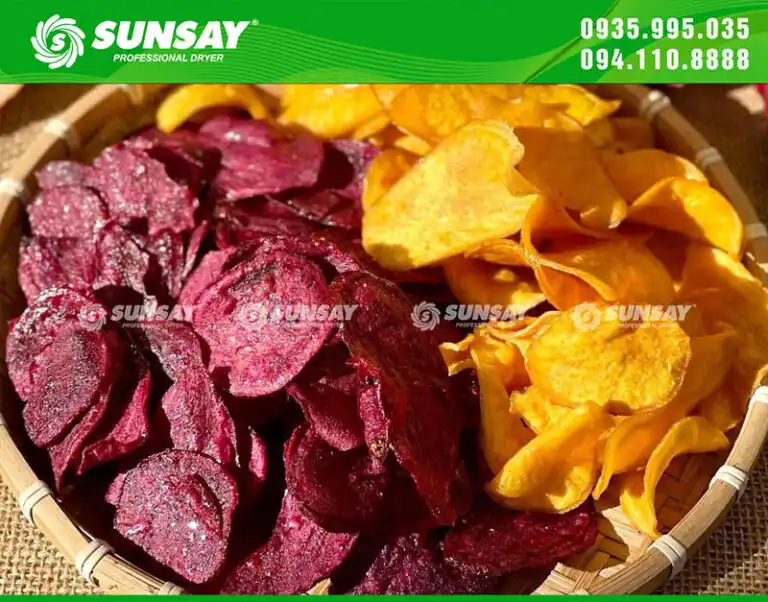
- Versatile Temperature Range: Suitable for drying a wide variety of vegetables, roots, and fruits. This system allows both hot and cold drying on the same equipment, adaptable to multiple drying purposes. SUNSAY cold dryers can also process seafood, dried medicinal herbs, and various types of fruits.
- Efficient Energy Use: Only water is discharged from the dryer, while 100% of energy is utilized for drying the product.
- Closed – Loop Drying Principle: Prevents external contaminants such as dust and bacteria from entering the dryer, keeping the materials extremely clean.
- Independent of Ambient Conditions: SUNSAY dryers are not affected by surrounding temperature or humidity, allowing operation in any location or climate.
- Dual Condensation Water Removal System: Ensures even moisture extraction from the inside out, independent of drying temperature.
- Programmable Drying Parameters: Temperature, humidity, and drying time can be programmed in stages depending on the specific drying process. The drying of vegetables, roots, and fruits also depends on the heating rate – if heated too quickly, the surface of the material can harden, slowing moisture release.

SUNSAY has introduced a wide range of cold dryers, from mini cold dryers to industrial-scale units, serving young entrepreneurs and fruit and food processing facilities. Many fruit-drying factories also choose SUNSAY dryers because of the dedication of the young professional team, the reliability and quality of the machines, and excellent customer service. Notably, SUNSAY cold dryers produce fruit products that meet export quality standards.
Popular Topics on Cold Dryers
- Mini cold dryers
- Home-use cold dryers
- 10 kg cold dryers
- Used / second-hand cold dryers
- Principles of cold drying
- Cold dryer prices
- Mini cold dryers (duplicate in original list)
- How to cold-dry using a refrigerator
- Freeze-dry machines for food and medicinal herbs
Contact for Price Quotes and Technical Drying Consultation
For food processing and production facilities, SUNSAY dryers are not just drying equipment – they are a comprehensive solution to enhance product value. These machines help businesses produce high-quality dried products that meet the demands of modern consumers and export markets, while optimizing production processes and reducing costs.
With all these outstanding benefits, SUNSAY dryers not only preserve food but also elevate product value, suitable for a wide range of needs – from home-scale use to large food processing enterprises.
For detailed consultation, visit our website: kynghexanh.com.vn, or contact us directly via Hotline (Zalo): 0935.995.035 or the switchboard: 094.110.8888 for support.
Reviews
There are no reviews yet.